Zum Inhalt springen
Zur Hauptnavigation springen
Gehe zur Startseite des Lebensgrundlagen für morgen sichern.
Suche öffnen
Gehe zur Startseite des Lebensgrundlagen für morgen sichern.
Lebensgrundlagen für morgen sichern

Navigation

International project with South Korea aims to further develop methods for researching heat and drought stress of wheat

JKI breeding researcher visits partners to discuss next steps

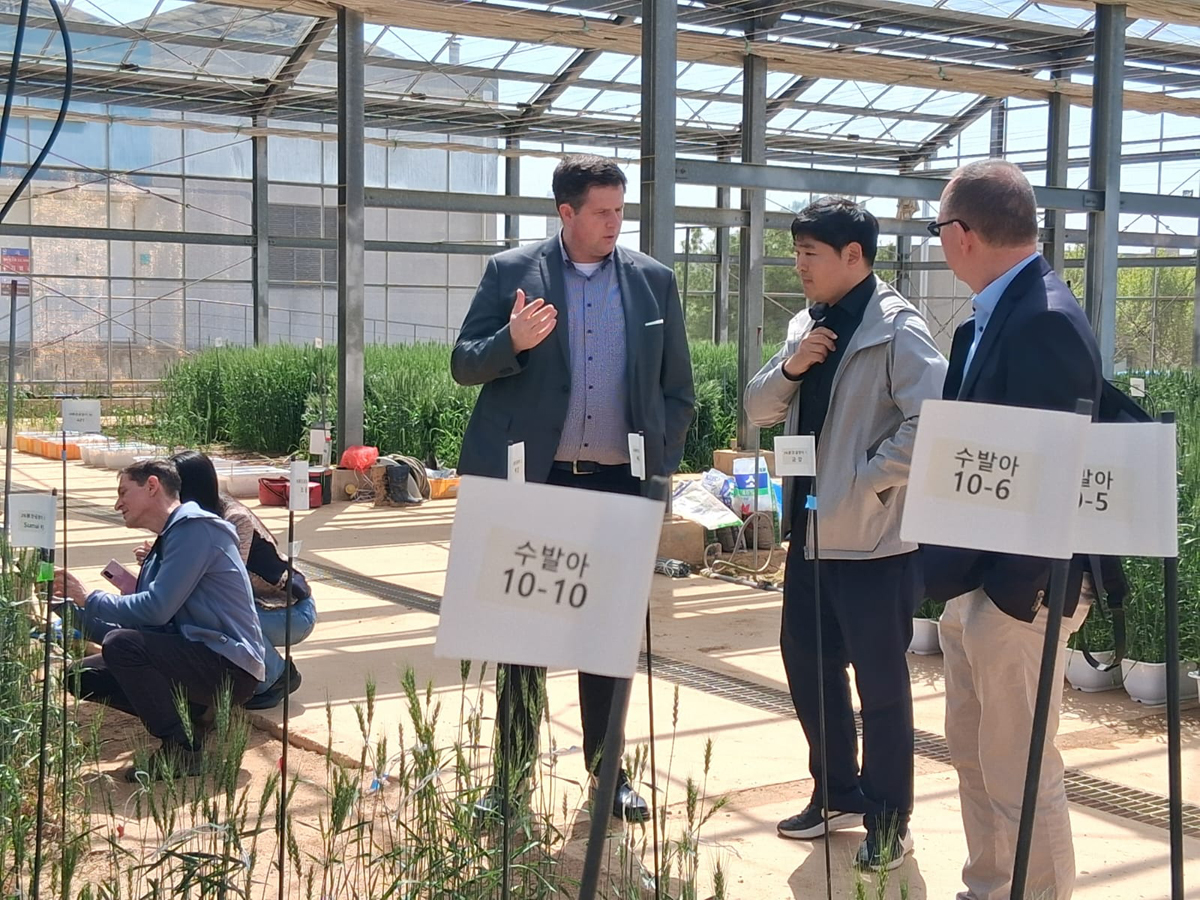
As part of a visit of a delegation of the Julius-Kühn-Institute (JKI) to South Korea from April 20th to 22nd, the members visited the National Institute for Crop and Food Science (NICS), a specialist institute operating under the umbrella of the state-run Rural Development Administration (RDA). NICS and its counterpart, the JKI-Institute for Resistance Research and Stress Tolerance (RS) have recently launched the three-year research project: “Exchange research technologies and methods of heat and drought stress tolerant wheat in response to climate warming and selection of genetic resources”. The head of JKI’s specialized institute, Prof. Dr Andreas Stahl, took advantage of his visit to South Korea to hold an initial face-to-face project meeting with his fellow researchers to discuss further details.

Due to climate change, such as global warming, wheat plants are increasingly suffering from heat damage. High temperatures during the grain-filling stage affect the grain-size and storage proteins of the grains, leading to yield losses and reduced quality.

“In order to ensure stable domestic wheat production in our two countries in the future, it is necessary to investigate the effects of temperature fluctuations during flowering and grain filling and to identify the genetic causes of heat stress tolerance,” says JKI’s breeding researcher Andreas StahlTo this end at his institute Gwendolin Wehner’s research group intends to investigate not only yield components but also the up- or down-regulation of specific genes in response to defined stress events.
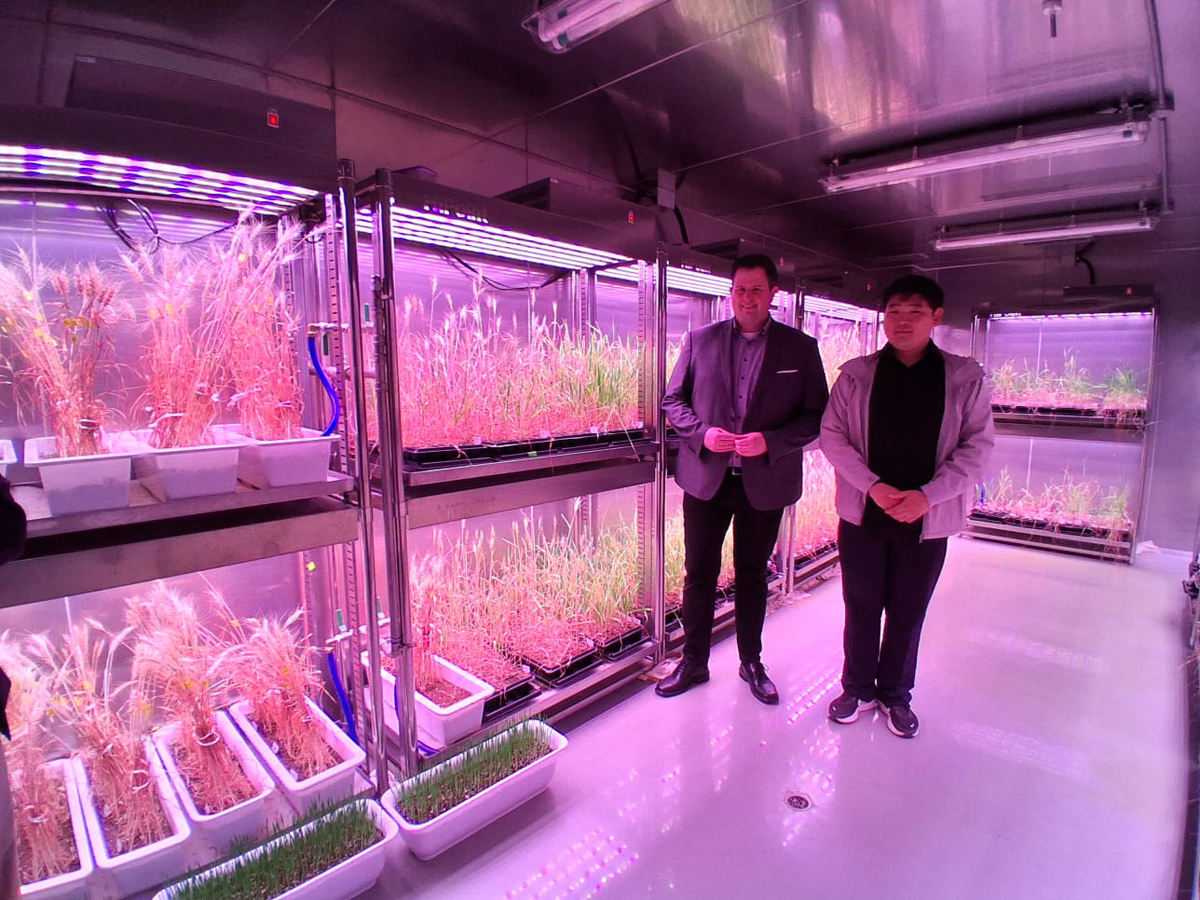
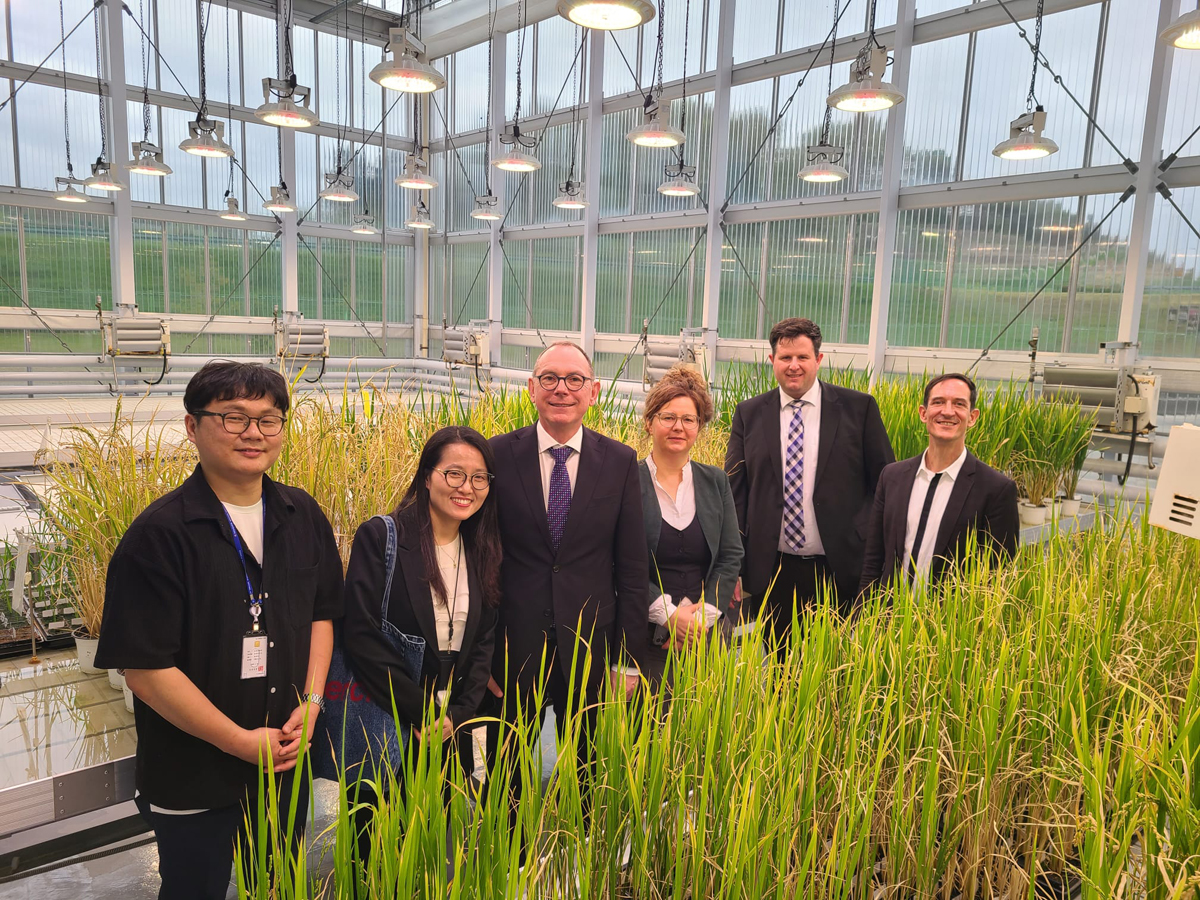
There is a considerable need in both South Korea and Germany to further develop research methods and technologies for heat and drought stress tolerance. To this end, an exchange with reciprocal experiments is to take place at the two cooperating institutions in order to collect, analyze and discuss findings.

Another advantage is that different wheat varieties are grown in Korea than in Germany and it is also of particular interest to analyze the differences between the crop varieties in terms of their tolerance to heat and drought stress, with a particular focus on the grain-filling-phase. Promising wheat lines could potentially serve as crossing partners for more in-depth genetic studies.

The signing of the Joint Declaration of Intent during a joint symposium in Jeonju to intensify the research cooperation between the two state-run agricultural research institutes - South Korea’s National Institute of Agricultural Sciences (NAS) and the Julius Kühn Institute (JKI), as Federal research Centre for Cultivated Plants - now makes it possible to intensify existing activities and explore further opportunities for collaboration in other fields as well.

Veröffentlicht am