
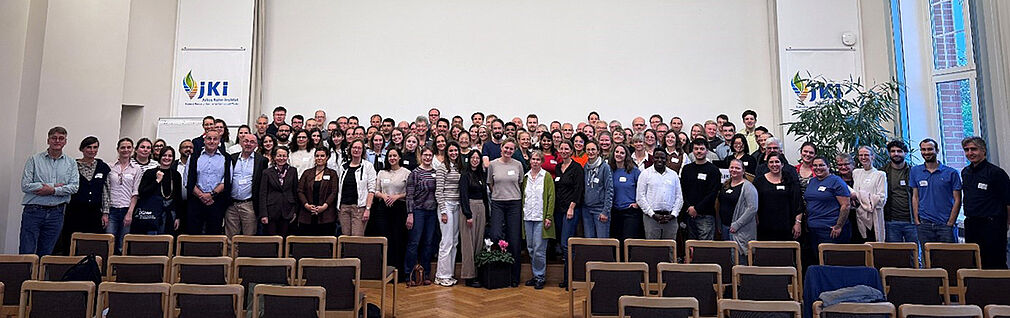
Berlin, 14 October 2026 – 120 participants and two days packed with new ideas: The 6th Annual Conference of the German Society for Metabolome Research (DGMet e. V.), held on 8 and 9 October at the Julius Kühn Institute (JKI) in Berlin-Dahlem, was better attended than ever before. International guests from England, Austria, Italy, the Czech Republic and the Netherlands gathered alongside scientists from across Germany. The focus was on one key question: How can small molecules be used to better understand complex biological processes and the development of practical solutions to further this understanding?
News
Small molecules, big impact: metabolomics research opens up new prospects for agriculture
From molecules to added value for agriculture, medicine and beyond
From molecules to added value for agriculture, medicine and beyond
Keeping plants or people healthy, what attracts or repels pests, and how pathogens are able to spread: small molecules play a crucial role in numerous biological processes. Metabolomics research reveals this chemical diversity and helps us understand which substances indicate certain conditions, trigger biological reactions or can influence specific processes.
The potential applications are wide-ranging and include, for example, agricultural and environmental sciences, medicine, nutrition and sport. This opens up a wide range of prospects for agriculture: metabolic profiles can, for instance, help to identify resilient plant varieties, detect stress responses at an early stage and better understand the interactions between plants, pests and pathogens. Such findings lay important foundations for more targeted plant protection, the development of new monitoring methods and the use of biological regulatory mechanisms. In the medical field, researchers are investigating, validating and confirming small molecules or molecular patterns to be used as biomarkers for early diagnosis.
When dogs can teach technology
When dogs can teach technology
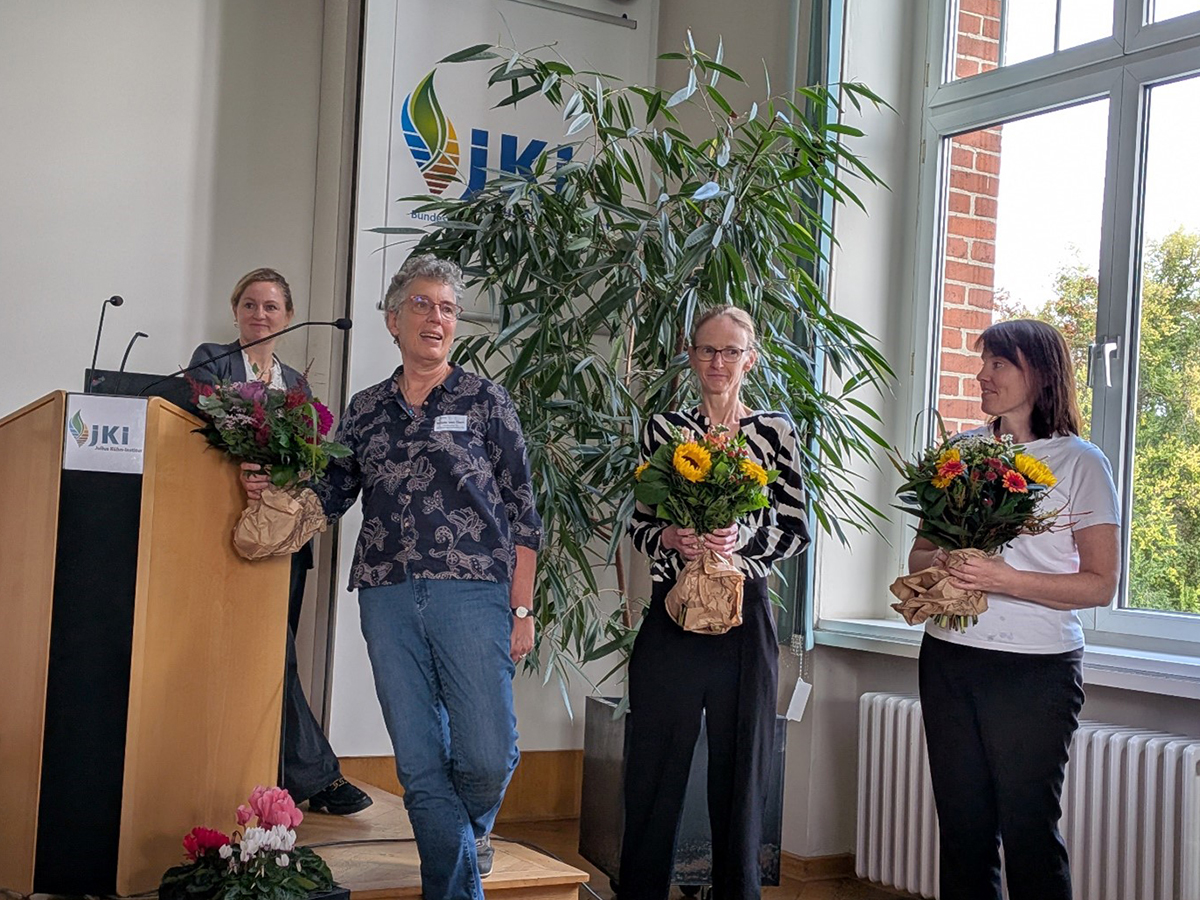
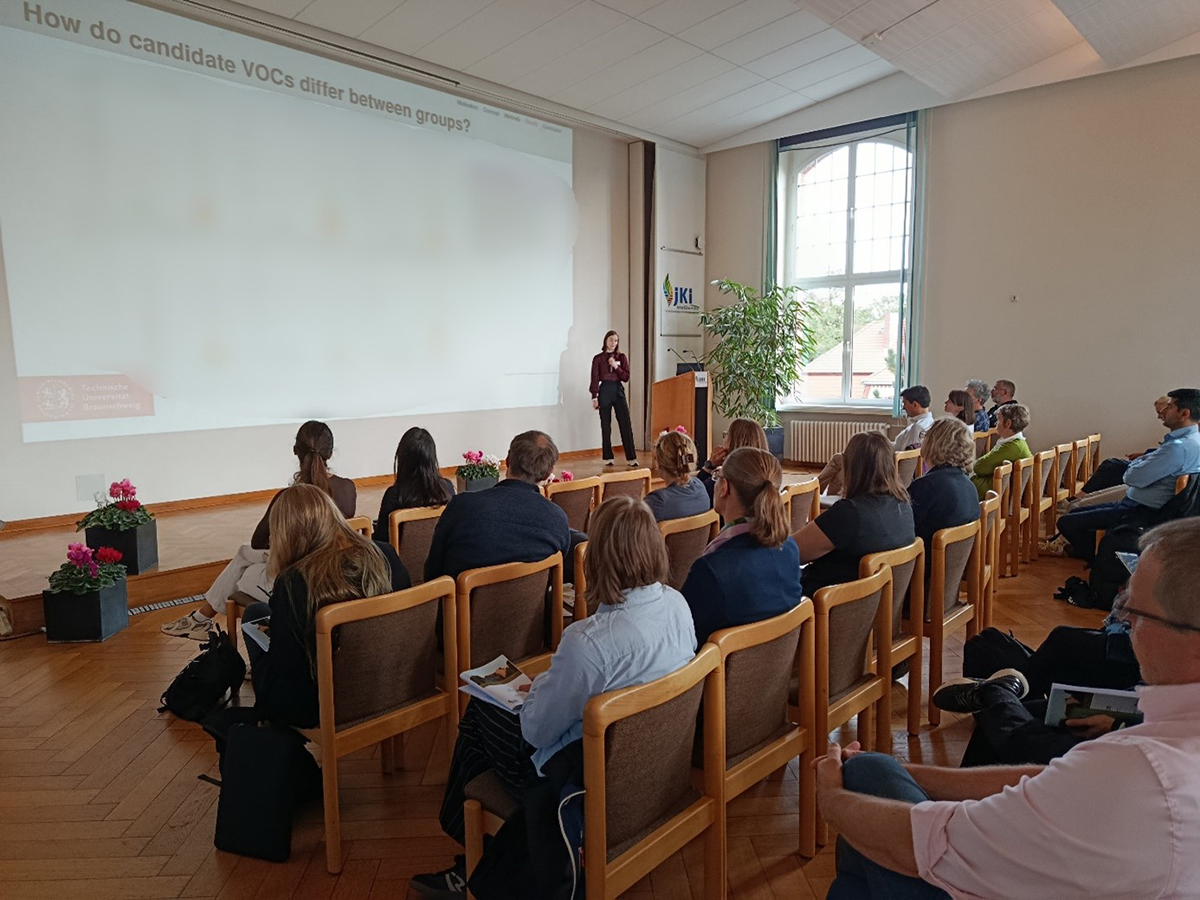
Lea Woyciechowski’s talk on ‘Dogolomics’ attracted particular attention. The PhD student is investigating the odour profiles of patients infected with COVID-19. The aim is to identify characteristic chemical patterns that could serve as markers for a rapid and reliable diagnosis. What specially trained dogs are already able to detect is being emulated with a type of technological weighting scale called a gas chromatography-mass spectrometer (GC-MS) analysis, although it is proving to be more challenging to identify and understand some of the specific compounds involved. Woyciechowski was awarded the prize for the best presentation for her contribution.
Turning complex measurement data into reliable insights requires bioinformatics tools that are both powerful and user-friendly. These tools do not only allow to analyse large datasets and identify biologically relevant patterns, they also enable data sharing via normed formats as presented by Nils Hoffmann with “LipidCompass”. Like in all fields of research, also artificial intelligence becomes more and more important in metaboomics bioinformatics. Those talks demonstrated how modern analytics and bioinformatics work together to open up new research avenues and, in the long term, enable practical applications.
The high diverse audience who came from a range of specialist backgrounds was united by a shared interest in small molecules. The conference enabled participants to look beyond the boundaries of their own disciplines and the variety of methods, research questions, approaches and fields of application opened up new ideas, approaches and perspectives for the participants’ own research.
Posters and Networking
Posters and Networking
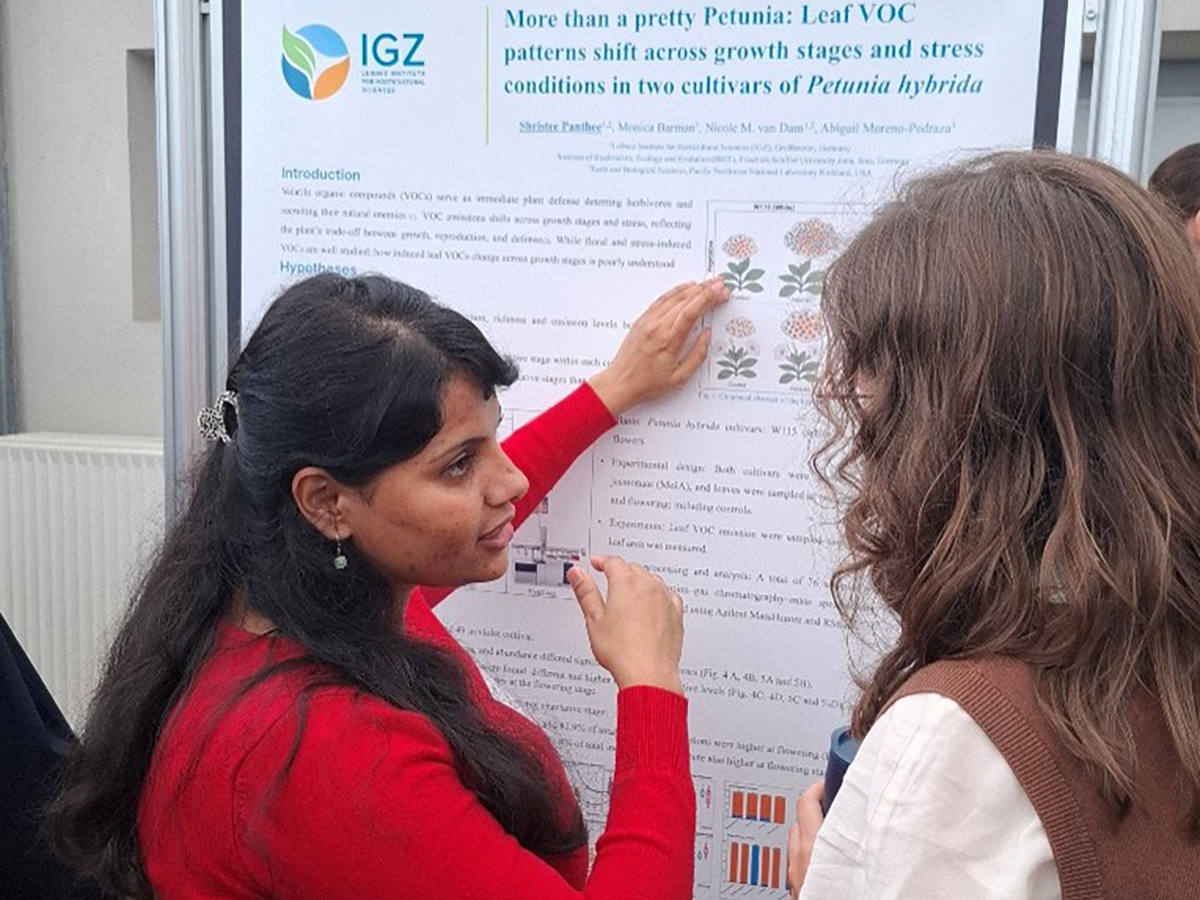
The poster session, featuring 41 presentations, provided an opportunity to discuss individual research projects in depth, compare methods and initiate new collaborations proving once again the benefits of meeting and networking in person. The greenhouse at the Julius Kühn Institute’s experimental field provided a unique setting for this. Three poster awards were awarded to the young scientists Lisa Mainieri (Uni Marburg), Shristee Panthee (IGZ) and Eleanor North (FAU Erlangen) for their excellent research.
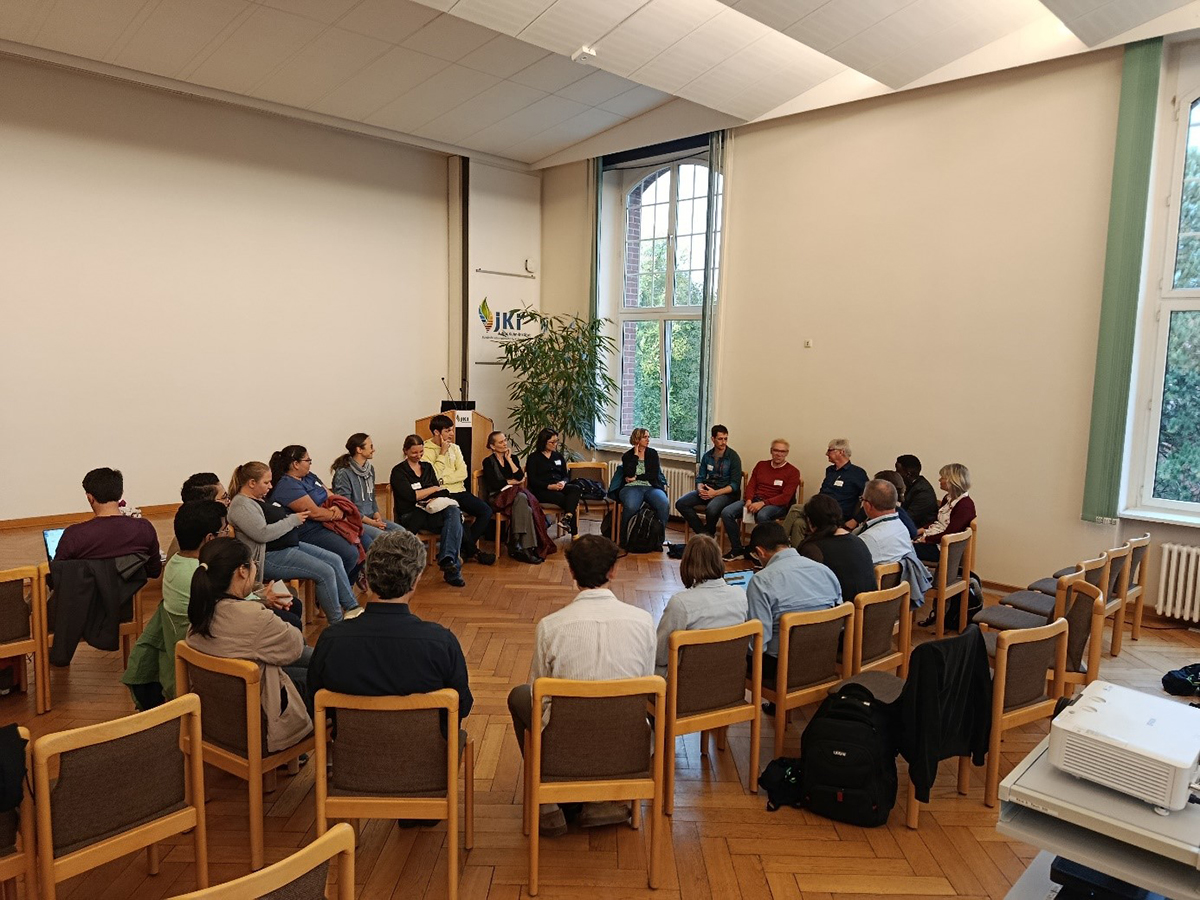
The evening workshops were entirely devoted to scientific exchange. Divided into six thematic groups, the participants discussed ‘best practice’ approaches, exchanged tips and planned future activities. The working groups meet regularly online outside of conferences for seminars, lectures and training sessions. In this way, the exchange continues beyond the conference and collaboration in metabolomics research is strengthened.
The conference was organised by Karin Gorzolka (JKI-ÖPV), Nicole van Dam (IGZ, Großbeeren/FSU Jena) and Jennifer Kirwan (BIH, Charité Berlin / Vetmeduni, Vienna) as the Berlin hosts. They were supported by the DGMet Executive Board, led by DGMet President Prof. Dr Verena Taudte. Both the participants and the organisers were delighted with the number of attendees, the lively discussions, the fruitful exchange of ideas and the wonderful atmosphere at this year’s DGMet conference at the JKI-ÖPV.
Veröffentlicht am