
Zum Inhalt springen
Zur Hauptnavigation springen
Gehe zur Startseite des Lebensgrundlagen für morgen sichern.
Suche öffnen
Gehe zur Startseite des Lebensgrundlagen für morgen sichern.
Lebensgrundlagen für morgen sichern

Navigation

Main content: New Horizon Europe project to shape Europe's crop breeding research agenda


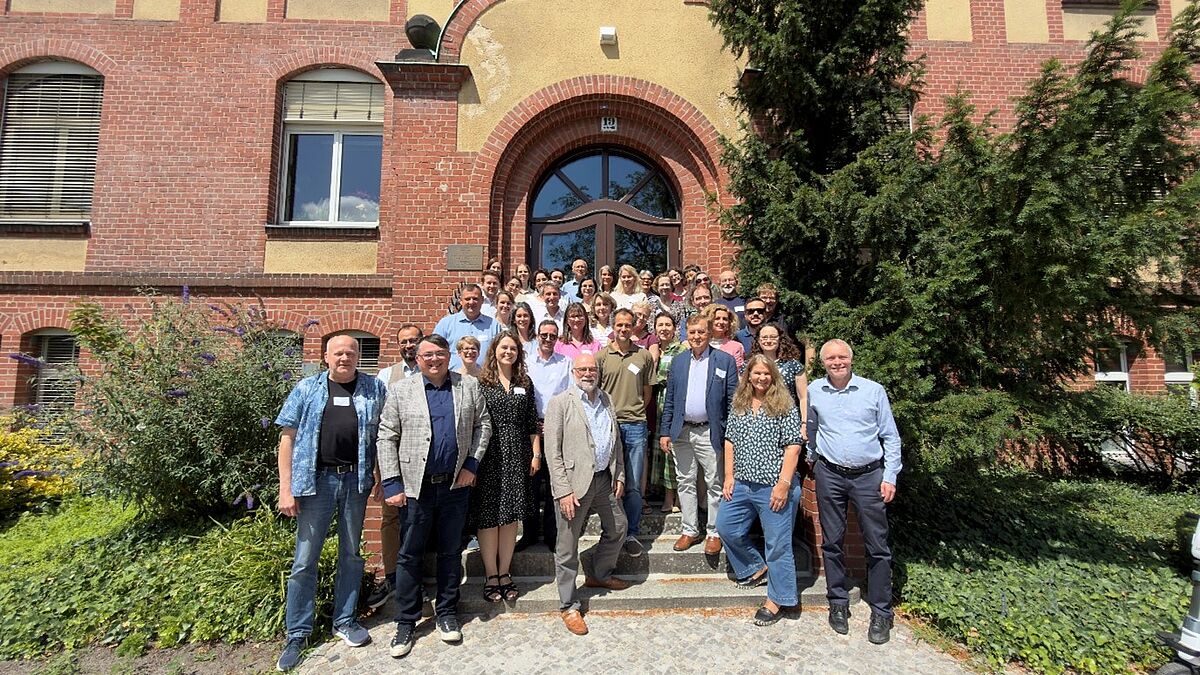
Berlin, Germany, 8 July 2026A new Horizon Europe project, COLiBRI – Collaborative Crop Breeding Research and Innovation for a Green Europe, is bringing together key actors from across Europe to strengthen coordination in crop breeding research and innovation and develop a shared vision for future investment. The project officially launches at its kick-off meeting on 8–9 July 2026 at the Julius Kühn-Institute (JKI) in Berlin-Dahlem, Germany.

A central objective of COLiBRI is the development of a European Plant Breeding Research and Innovation Roadmap, accompanied by an implementation strategy and a framework for a future pan-European plant breeding network and funding mechanism. Together, these outputs will help align research priorities, breeding-sector needs, policy objectives and funding opportunities across Europe.

Crop breeding is essential for developing varieties that can help agriculture respond to climate change, enhance sustainability, support biodiversity and contribute to food and nutritional security. Yet Europe's crop breeding research and innovation landscape remains fragmented, with funding, infrastructure and research efforts often insufficiently coordinated.

COLiBRI was established to address this challenge. Funded under Horizon Europe Cluster 6 – Farm2Fork, the project runs from 1 June 2026 to 30 November 2028 and brings together 17 organisations representing public research institutions, plant breeders, farmers, research infrastructures, European networks and policy actors.

Over the next two and a half years, project partners will work with stakeholders across the crop breeding value chain to identify research priorities, assess technological and infrastructure needs, analyse funding gaps and explore opportunities for stronger collaboration. The project will consider a broad range of crops, traits, technologies, production systems and breeding approaches to ensure that future recommendations reflect the diversity of European agriculture


"Europe needs a stronger and more coordinated approach to crop breeding research and innovation if we want to respond effectively to climate, food security and competitiveness challenges," said Ralf Wilhelm, Project Coordinator at the Julius Kühn-Institute. "COLiBRI will bring together the perspectives of researchers, breeders, farmers, policymakers and funders to help shape a shared roadmap for future action and investment."

Stakeholders will contribute to the project through surveys, expert consultations, workshops and dedicated networking activities. Their input will help ensure that the roadmap reflects both current challenges and emerging opportunities for European crop breeding.

By creating a common strategic direction for crop breeding research and innovation, COLiBRI aims to strengthen Europe's capacity to deliver resilient, competitive and sustainable agricultural systems that can meet future environmental, economic and societal needs.


About COLiBRI

COLiBRI – Collaborative Crop Breeding Research and Innovation for a Green Europe is a Horizon Europe Coordination and Support Action funded under Cluster 6 – Farm2Fork. Running from 1 June 2026 to 30 November 2028, the project is coordinated by the Julius Kühn-Institute (Germany) and brings together 17 partner organisations from across Europe. COLiBRI will develop a European Plant Breeding Research and Innovation Roadmap, an implementation strategy and recommendations for future coordination and funding mechanisms to strengthen crop breeding research and innovation in Europe.

Partners

  • Nacionalni inštitut za biologijo
  • National Academy of Sciences of Ukraine, Institute of Food Biotechnology and Genomics, IFBG
  • Wageningen University and Research, Stichting Wageningen Research
  • Forumul Agricultorilor și Procesatorilor Profesioniști din România, FAPPR
  • Euroseeds
  • Plants for the Future ETP, Plant ETP
  • Polska Izba Nasienna, PIN
  • Aarhus Universitet
  • TU Graz, Graz University of Technology
  • Wageningen Universiteit
  • International Plant Genetic Resources Institute, IPGRI
  • International Centre for Advanced Mediterranean Agronomic Studies - Mediterranean Agronomic Institute of Zaragoza, CIHEAM Zaragoza
  • INRAE - Institut national de recherche pour l'agriculture, l'alimentation et l'environnement
  • Europese Organisatie Voor Wetenschappelijk Plantenonderzoek, E.P.S.O. IVZW, EPSO
  • Centralny Ośrodek Badania Odmian Roślin Uprawnych, COBORU
  • Ökológiai Mezőgazdasági Kutatóintézet Közhasznú Nonprofit Kft., ÖMKi

Veröffentlicht am