
Zum Inhalt springen
Zur Hauptnavigation springen
Gehe zur Startseite des Lebensgrundlagen für morgen sichern.
Suche öffnen
Gehe zur Startseite des Lebensgrundlagen für morgen sichern.
Lebensgrundlagen für morgen sichern

Navigation

Fichtenretter launches forest stress experiment in the Harz region


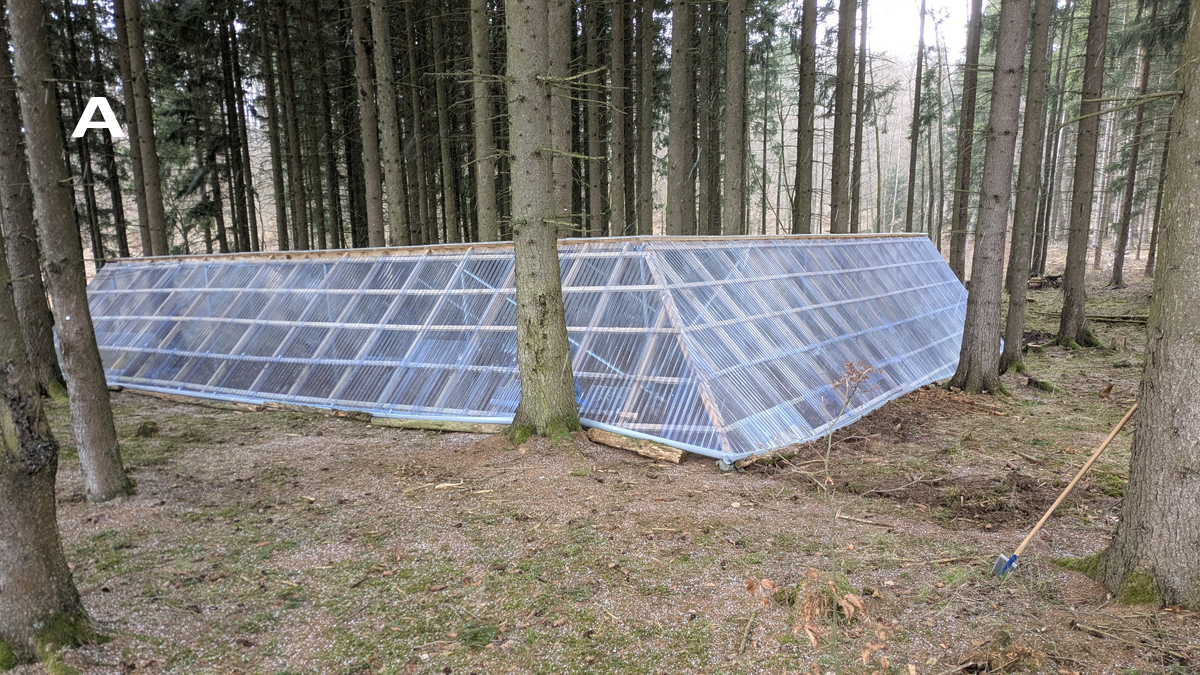
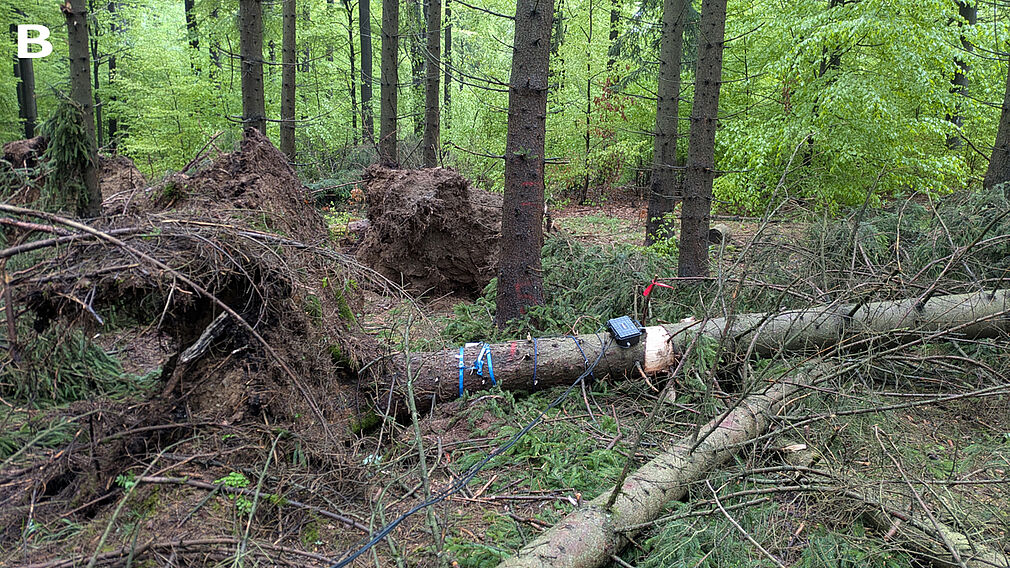
The facilities will enable researchers from the Julius Kühn Institute for Forest Protection, in cooperation with the Forstbetrieb Ostharz, to investigate how spruce trees respond to major disturbance factors that increasingly threaten forests in the Harz region. Particular attention will be given to drought and wind damage, both of which can weaken tree defenses and increase vulnerability to bark beetle infestations.

Throughout spring and summer, scientists will monitor the physiological and chemical responses of trees exposed to experimentally induced water stress and windthrow conditions. The goal is to detect the earliest signals emitted by stressed trees, including volatile compounds that may influence bark beetle behavior and contribute to the onset of infestation.
The Fichtenretter project, funded by the Fachagentur Nachwachsende Rohstoffe (FNR), runs from November 2024 to October 2027 and aims to improve our mechanistic understanding of the interaction between Norway spruce and bark beetles, from the initial weakening of trees to the development of large-scale outbreaks. Researchers will first identify volatile compounds released by drought-stressed and wind-damaged trees, then evaluate whether these substances attract bark beetles. Associated physiological responses, including processes that regulate tree respiration and growth, will be continuously monitored using a range of state-of-the-art instruments. In a further step, genetic markers associated with reduced attractiveness to beetles will be investigated in spruce populations located within outbreak hotspots.

The knowledge gained will support the development of innovative forest protection strategies. New attractants could improve the early detection and control of pioneer beetle populations before mass outbreaks occur, while genetic markers may help identify and select spruce trees with greater natural resistance for future forest regeneration efforts.

Fichtenretter-Team: Daniel Magnabosco, Adrian Villalobos, Hannah Ziesche, Florian Mann and Henrik Hartmann

Veröffentlicht am