

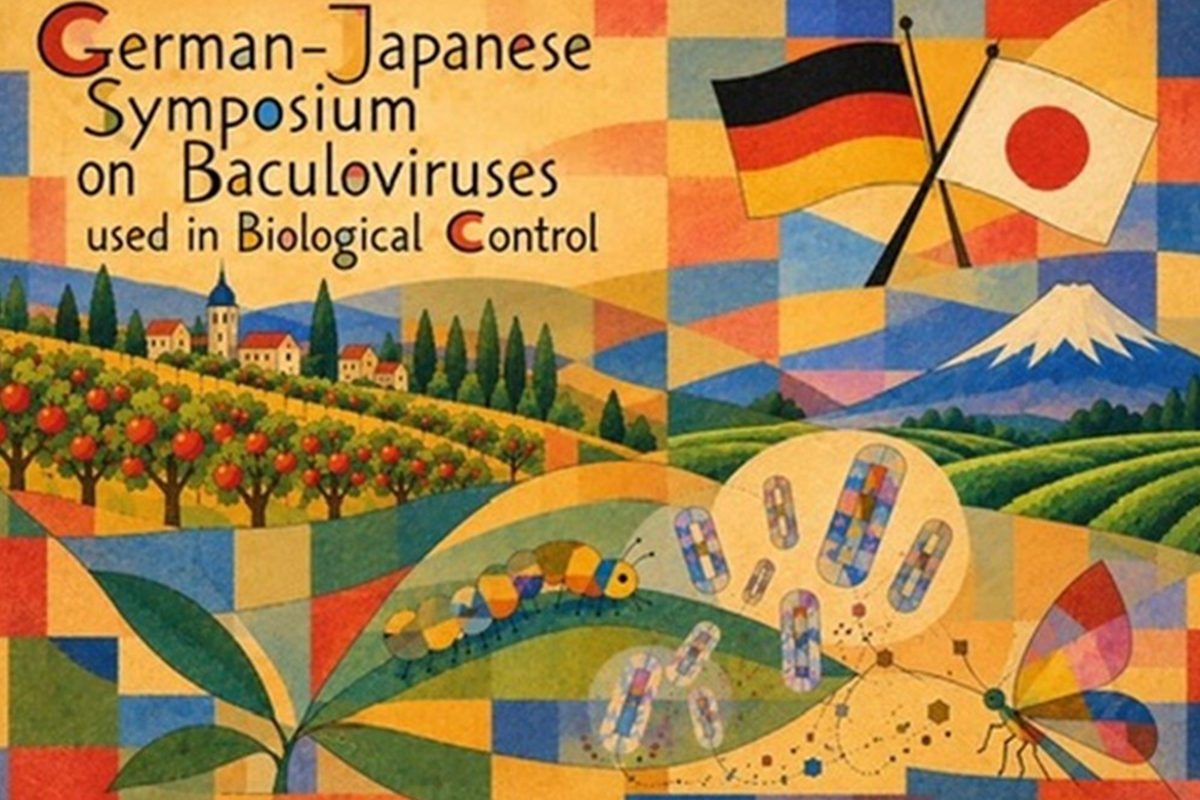
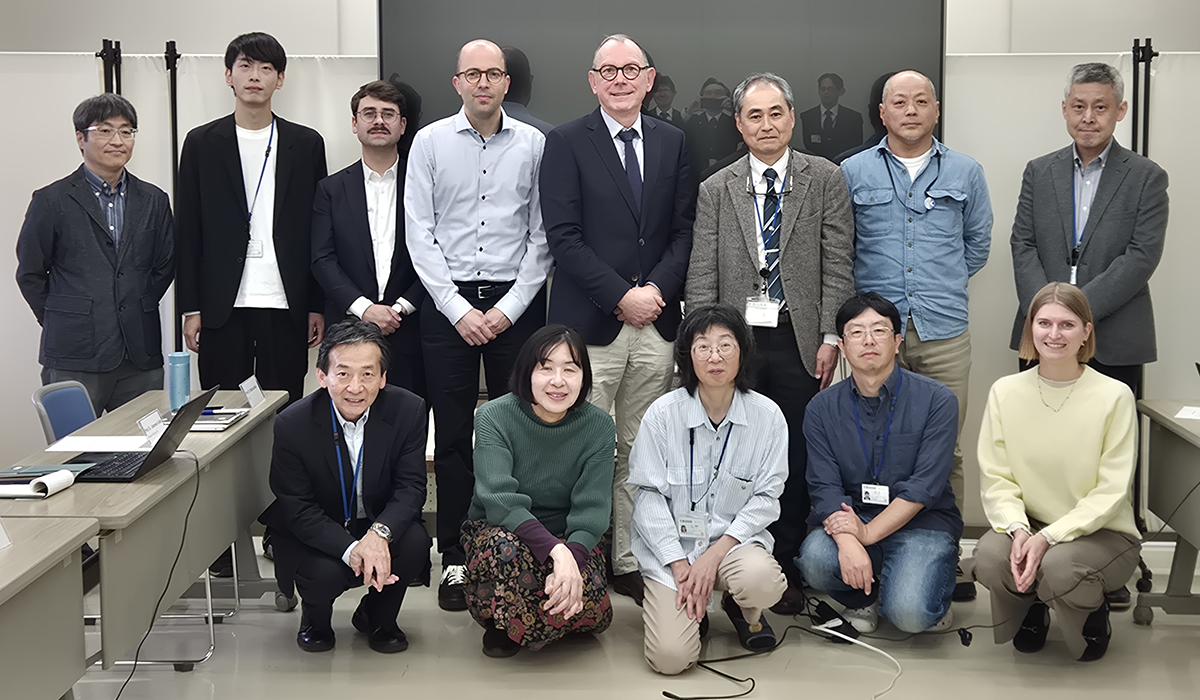
On the occasion of the “German-Japanese Symposium on Baculoviruses Used in Biological Control” (Photo 1 and Photo 2), Prof. Dr. Johannes Jehle, Dr. Jörg Wennmann, and doctoral student Lina Dammel spent a couple of days as guests at the Tokyo University of Agriculture and Technology (TUAT) in the Fuchu district. The symposium also marked the approaching conclusion of the project “Resistance Management Strategies of Baculoviruses Used as Biological Control Agents,” which has been started on April 1, 2024, and is funded on the German side by the BMLEH. On the Japanese side, the project is led by Prof. Dr. Madoka Nakai and financially supported by the Ministry of Agriculture, Forestry and Fisheries (MAFF). The project enabled doctoral candidate Ms. Dammel to spend two periods of several months each with the Japanese partner institution to learn methods (apoptosis assays, microinjection, CRISPR/Cas) and transfer knowledge. The research conducted by both institutes complements each other exceptionally well, as both sides are working on baculovirus resistance: at the JKI Institute BI with the codling moth (Cydia pomonella), and at TUAT with the tea leaf roller (Adoxophyes honmai). The half-day symposium was complemented by presentations from colleagues from TUAT as well as the University of Tokyo.
Strengthening German-Japanese Cooperation in Biological Plant Protection
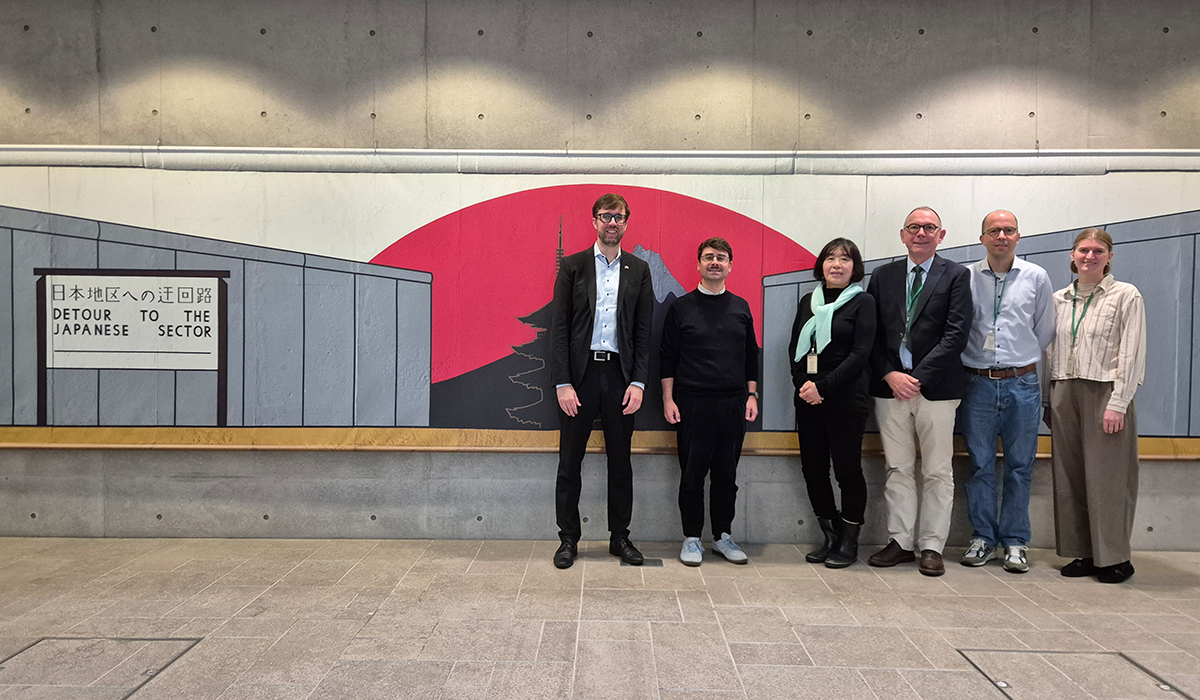
The visit to Tokyo was also used to strengthen existing ties with the Institute for Plant Protection, headed by Dr. Yasao Ohto, and the Agricultural Information Research Center at the National Agricultural Research Organization (NARO) in Tsukuba. The goal was to explore common research interests with a view to strengthening cooperation in the fields of biological plant protection and artificial intelligence (AI) and to initiate even more intensive collaboration with the Japanese colleagues (Photo 3).
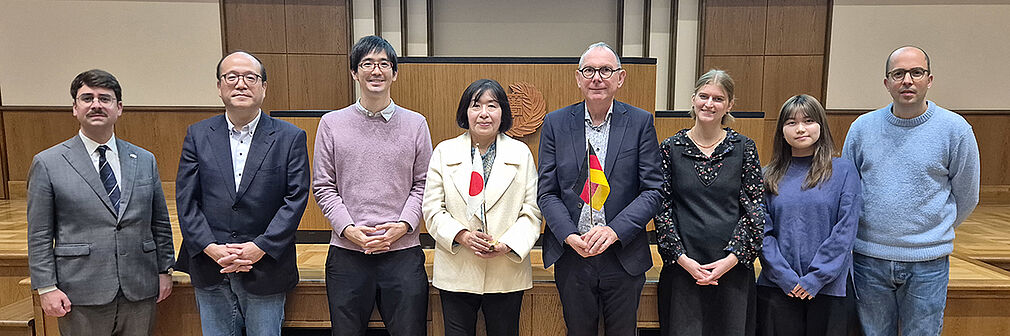
The visit was completed by an invitation from Bastian Semmel, Agricultural Attaché and First Secretary at the German Embassy in Tokyo, and Oliver Pieper, Head of the Science Section and First Secretary there, to the German Embassy in the Minami-Azabu district, where a lively exchange took place regarding the state of agriculture in Japan and opportunities for future research cooperation between Japan and Germany (Photo 4). Mr. Semmel was kind enough to accompany us on our visit to NARO and delivered a welcome address at the joint symposium in Fuchu.
A particularly touching and unforgettable highlight was a reception following the symposium, during which the hosts not only instructed us how to make nigiri sushi but also led us in a musical interlude—a group rendition of the “Ode to Joy” from the final movement of Beethoven’s Ninth Symphony. Arigatou gozaimasu ありがとうございます
Veröffentlicht am