

Introduction
Wheat is among the most important staple crops worldwide. For decades, yield increase was linear, leading to improvements of wheat production and food security. However, in many countries this yield increase ceased when grown continuously. Reasons such as accumulation of soil-borne pathogens, climate change, reduced nitrogen use efficiency, or a shift in the soil microbiome were discussed to contribute to increased root senescence and subsequently to yield decline. However, the underlying mechanisms are still not understood. The project RhizoWheat, therefore, aims at elucidating rhizosphere processes governing the yield decline of wheat grown as a second or third wheat in a crop rotation.
RhizoWheat is coordinated by Christian-Albrechts-Universität zu Kiel (CAU) with contributions from Julius Kühn Institute (Institute for Epidemiology and Pathogen Diagnostics, JKI-EP, Braunschweig), Institute of Sugar Beet Research (IfZ, Göttingen) and Forschungszentrum Jülich (Institute of Bio- and Geosciences, FZJ, Jülich). RhizoWheat is funded by the Federal Ministry of Research, Technology and Space (BMFTR) under the Funding Program Rhizo4Bio (Phase 1: 2020-2024, Phase 2: 2024-2027). The project is structured into 6 work packages, which integrate complementary expertise from e.g. soil science, microbiology, plant nutrition for multidisciplinary analysis of the yield decline phenomenon.
Rhizo4Bio (Phase 2): RhizoWheat - Rhizosphere processes and yield decline in wheat crop rotations

Start date: 01/03/2024 | End date: 28/02/2027
The RhizoWheat project aims to elucidate and quantify key rhizosphere processes governing yield decline of double (triple) cropped wheat and to establish a model framework enabling the prediction of yield decline as a function of initial soil inoculum and environmental factors.
Project summary
For decades wheat yield increase was linear, leading to improvements of wheat production and food security. In many countries this yield increase ceased and currently increase of wheat production is lower than population growth. Within a recent project (BMBF-IPAS/BRIWECS), however, it has been shown that breeding progress for wheat yield is still linear even under adverse environmental conditions. This leads to the hypothesis that increasing portions of second wheat in crop rotations and the extension of wheat production to less favorable regions, accompanied with already prevalent effects of climate change, are main drivers of the decline of average wheat yields.
The yield decline of second wheat is often attributed to root senescence caused by infection with Gaeumannomyces graminis var. tritici (take all). This goes in line with the finding that the yield decline of second wheat is higher under drought stress conditions. Recent findings, however, indicate that a broader shift of the rhizosphere microbiome occurs as a consequence of wheat as a precrop and that this shift may be involved in the increased senescence of roots and the accompanied yield decline. This hypothesis is further supported by older observations that yield decline happens in some years without the typical visible symptoms of take all.
The overall objectives of this project are to (a) elucidate and quantify the key processes governing the yield decline of wheat as a second or third wheat in a crop rotation with the main emphasis on rhizosphere processes and (b) to establish a model framework enabling the prediction of yield decline as a function of initial soil inoculum and environmental factors. In a longer-term perspective, management options may be identified which may enable breeders or farmers to overcome pre-crop induced yield decline in wheat production at least partially. This may include the identification of tolerant wheat germplasm and the manipulation of the wheat rhizosphere microbiome.
The project strives to reach the above objectives using a combined approach of long-term field experiments and specially designed rhizobox container experiments. A complementary set of methods at different scales (DNA/RNA profiling to remote sensing) will be used to gain insights into the proposed complex interactions of the biological, biogeochemical and physical rhizosphere processes involved in the yield decline syndrome. Simulation models on different scales will be used to combine the obtained results in a quantitative way and to predict the effect yield decline of wheat in self rotation for different environmental conditions.
Work package 1: Field Experiments, Rhizobox Studies and Data Management
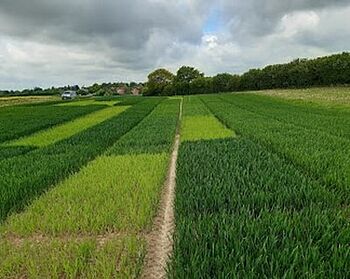
The project combines long-term field experiments, controlled soil column studies and rhizobox experiments to investigate how crop rotation, nitrogen fertilization and soil microbial communities influence yield formation of winter wheat.
Field experiments are conducted at two research sites: Hohenschulen near Kiel (sandy loam soil) and Harste near Göttingen (silty loam soil). Winter wheat is grown following different pre-crops and under varying nitrogen fertilization regimes, providing a wide range of management conditions. Extensive datasets are collected, including drone-based multispectral and thermal imagery, soil moisture measurements, biomass production, carbon and nitrogen concentrations, grain yield and quality parameters, as well as soil mineral nitrogen dynamics.
Soil from the field sites is further used in soil column and rhizobox experiments under controlled conditions. These studies enable detailed investigations of root growth, rhizosphere processes, nutrient cycling and plant–microbe interactions across different soil depths. Microbial inoculants, selected for their plant growth-promoting properties, are tested for their ability to enhance wheat growth and nutrient acquisition. Soil and rhizosphere samples are analyzed for nutrient availability, microbial biomass, enzyme activities, microbial community composition and the occurrence of soil-borne pathogens.
All experimental data are centrally managed, shared among project partners and archived in long-term research databases to support integrated analyses and future reuse.
Work package 2: Pre-crop effects
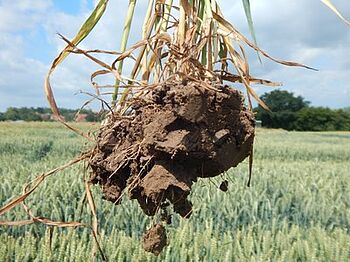
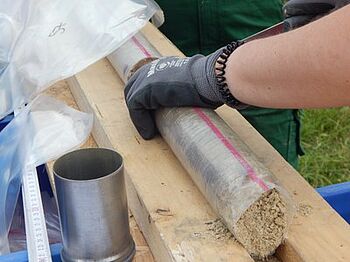
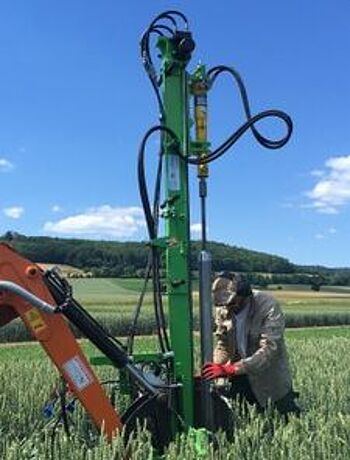
Work Package 2 investigates how different pre-crops influence soil conditions, soil microbial communities and the performance of subsequent winter wheat. The aim is to better understand the mechanisms underlying pre-crop effects on root development, nutrient availability, soil structure and resource-use efficiency.
Field experiments at the Kiel and Göttingen sites are used to quantify the effects of different pre-crops on wheat growth and yield formation. Crop residues and root systems of the preceding crops are characterized in terms of biomass, carbon and nitrogen content, while wheat root development is monitored throughout the growing season using destructive sampling and minirhizotron imaging. In addition, the impact of pre-crops on soil structure and root health is assessed.
The project further investigates how different crop rotations shape soil microbial communities and their functions. Soil and rhizosphere samples are analyzed using DNA-based approaches to characterize bacterial and fungal communities, identify microbial indicators of soil health and productivity, and evaluate the occurrence of plant pathogens. At the plant level, wheat gene expression and regulatory mechanisms involved in adaptation to different soil microbiomes and cropping systems are examined.
To better understand nutrient cycling processes, microbial activities involved in carbon and nitrogen turnover are quantified through analyses of key soil enzymes and their efficiencies. Drone-based multispectral observations, combined with field measurements and simulation models, are used to assess radiation, water and nitrogen use efficiencies. Together, these investigations provide a comprehensive understanding of how different pre-crops influence soil functioning, wheat growth and final grain yield.
Work package 3: Genotype × Pre-crop Interactions
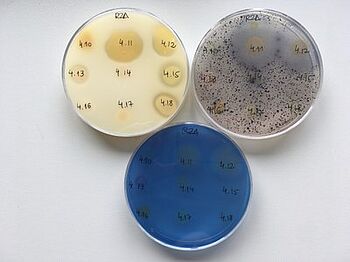
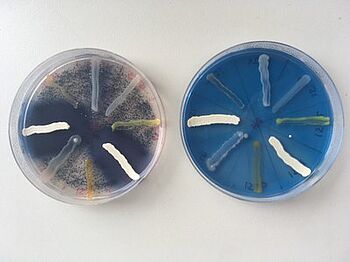
Work Package 3 explores how wheat genotypes differ in their response to preceding crops and how these interactions are mediated by the soil and rhizosphere microbiome. The overall goal is to identify plant traits and genetic factors that improve wheat performance in wheat-based crop rotations and support the development of varieties better suited for continuous wheat cultivation.
Field experiments at the Kiel and Göttingen sites compare multiple wheat genotypes grown after oilseed rape and wheat. Differences in root system architecture, aboveground growth, resource-use efficiencies and grain yield are quantified to determine how genotype and pre-crop jointly influence crop performance. Particular attention is given to root development, as roots play a key role in nutrient acquisition and interactions with soil microorganisms.
The project further investigates how different wheat genotypes shape the composition and activity of microbial communities in the rhizosphere. Advanced DNA- and RNA-based approaches are used to characterize bacterial and fungal communities, identify beneficial microorganisms and pathogens, and uncover plant genes and regulatory mechanisms involved in the adaptation to different soil microbiomes and cropping systems. These analyses aim to identify genetic markers and candidate genes that can support future wheat breeding programs.
In complementary rhizobox experiments, root exudates and microbial activities are studied directly in the root zone. Combining metabolomic analyses, enzyme activity measurements and gene expression data enables a detailed assessment of how different wheat genotypes influence rhizosphere processes, nutrient mobilization and plant–microbe interactions. Together, these studies provide new insights into the biological mechanisms underlying genotype-specific responses to crop rotation and soil microbial communities.
Work package 4: Microbiome Management
Work Package 4 investigates strategies for managing the soil microbiome to enhance wheat growth, health and productivity. The central hypothesis is that beneficial microbial inoculants and organic amendments, such as compost, can improve plant performance by stimulating beneficial microbial processes in the soil and rhizosphere.
Field-near soil column and rhizobox experiments are used to evaluate how microbial inoculation and compost application influence the composition and function of soil microbial communities under different soil and pre-crop conditions. Microbial establishment and persistence are monitored, while advanced sequencing approaches are applied to characterize changes in bacterial and fungal communities, identify beneficial microorganisms and pathogens, and assess the functional potential of the microbiome.
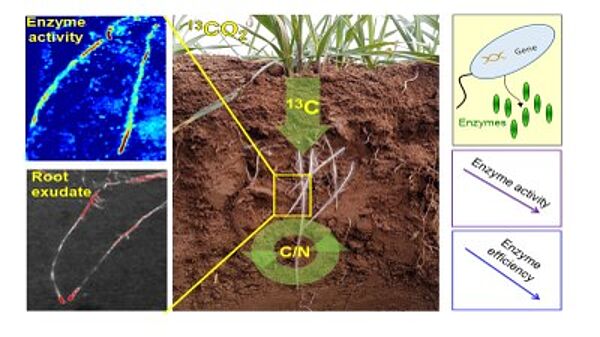
The project further examines how microbiome management affects nutrient cycling and plant resource acquisition. Stable isotope tracing techniques are used to quantify carbon allocation to roots and soil, as well as water and nitrogen uptake from different soil depths. Plant growth, grain yield and grain quality are monitored throughout the experiments to evaluate the agronomic benefits of microbiome-based interventions.
In addition, microbial biomass, nutrient availability and key enzyme activities involved in carbon and nitrogen cycling are analyzed in soil and rhizosphere samples. By linking microbiome composition, microbial functioning and plant performance, this work package aims to identify effective microbiome-based solutions that can reduce yield penalties in wheat and improve the sustainability of cereal production systems.
Work package 5: Model-Based Analysis of the Effects of Genotype, Management, Pre-crops and Climate Change on Wheat Yield (Risk Assessment)
Work Package 5 integrates experimental results from the project into advanced soil–plant–atmosphere models to assess how genotype, crop management, pre-crop effects and climate change interact to influence winter wheat yield formation. The aim is to improve the prediction of wheat yield and yield stability across a wide range of environmental conditions and future climate scenarios.
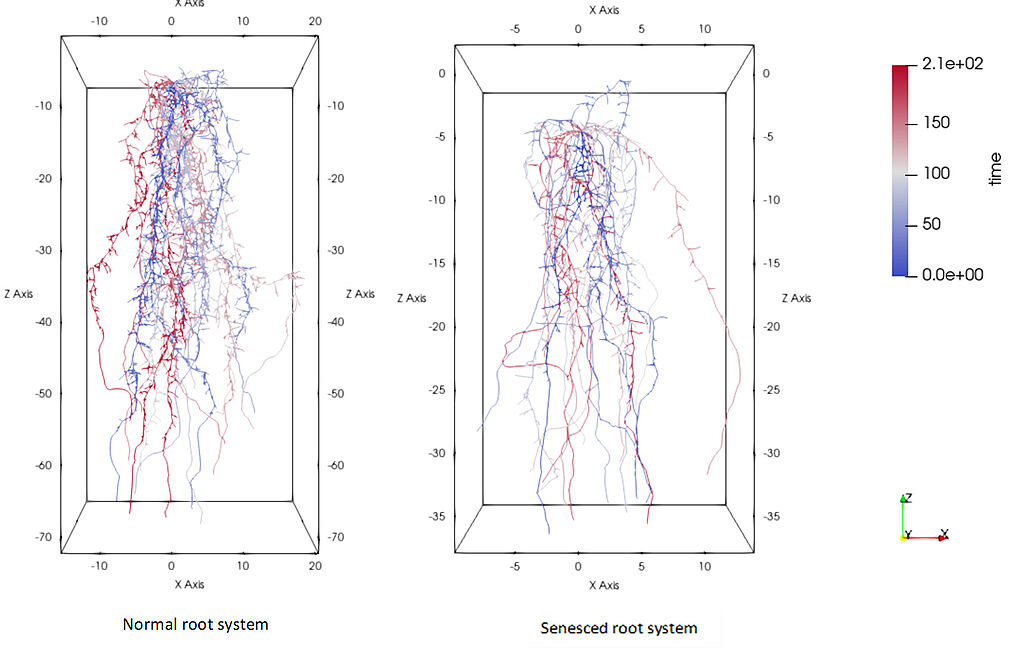
Root growth models with different levels of complexity are parameterized and evaluated using data generated in the field, soil column and rhizobox experiments. Measurements of root development, soil water dynamics, canopy characteristics and microbial indicators are incorporated to improve the representation of plant–soil interactions and resource uptake processes. Particular emphasis is placed on identifying genotype-, management- and pre-crop-specific traits that influence root distribution and plant performance.
The validated models are then used to simulate wheat growth under contrasting soil, weather and management conditions. Scenario analyses explore how different wheat genotypes, crop rotations and management strategies affect yield formation and resilience to environmental stress. These simulations help identify management options that enhance productivity and reduce production risks.
Finally, ensemble simulations driven by regional climate projections are conducted for sites across Germany and selected regions in Central and Northern Europe. By combining climate scenarios with genotype-specific root traits and management options, the project evaluates potential adaptation strategies and their capacity to maintain stable wheat yields under future climatic conditions.
Work package 6: Communication of Results and Knowledge Transfer
Work Package 6 brings together the findings from all project activities and translates them into practical recommendations for research, plant breeding and agricultural management. The aim is to synthesize the knowledge generated throughout both project phases and ensure that the results are effectively communicated to stakeholders and the wider public.
Experimental data from field, soil column and rhizobox studies are integrated to provide a comprehensive understanding of how pre-crops influence root development, soil microbial communities, resource-use efficiency and wheat yield. Relationships between root traits, microbiome composition and crop performance are analyzed across different environments, management strategies and wheat genotypes. In addition, the modelling approaches developed within the project are used to assess yield performance and yield stability under a wide range of soil, climate and management scenarios.
Based on these integrated analyses, recommendations are developed to mitigate negative pre-crop effects and improve the productivity and resilience of wheat-based cropping systems. Particular attention is given to crop management strategies, cropping system design, plant breeding approaches and microbiome-based solutions.
Key findings are communicated through scientific publications, project websites, agricultural media, stakeholder events and major agricultural exhibitions. This work package ensures that project outcomes are transferred efficiently to farmers, advisors, researchers, breeders and other stakeholders, thereby supporting the adoption of sustainable and resilient wheat production systems.
Publications
- Kaloterakis, N., Braun-Kiewnick, A., Rashtbari, M., Giongo, A., Babin, D., Zamberlan, P. M., ... & Brüggemann, N. (2026). Bacillus seed coating mitigates early growth reduction in successive winter wheat without altering rhizosphere bacterial and archaeal communities. BMC Plant Biology. https://doi.org/10.1186/s12870-026-08128-2
- Rashtbari, M., Han, L., Hosseini, S. S., Azimi, A. S., Kage, H., Cai, D., ... & Razavi, B. S. (2026). Plant-mediated carbon dynamics drive rhizosphere microbiome responses in successive wheat systems. Geoderma, 471, 117867. https://doi.org/10.1016/j.geoderma.2026.117867
- Braun-Kiewnick, Andrea; Giongo, Adriana; Zamberlan, Priscilla Mena; Pluta, Patrick; Koch, Heinz-Josef; Kage, Henning; Smalla, Kornelia; Babin, Doreen (2025): The microbiome of continuous wheat rotations: minor shifts in bacterial and archaeal communities but a source for functionally active plant-beneficial bacteria. Phytobiomes Journal. 9 (2), 240-256.
Doi: 10.1094/PBIOMES-05-24-0054-R
Link OpenAgrar - Kaloterakis, N., Rashtbari, M., Reichel, R., Razavi, B. S., & Brüggemann, N. (2025) Compost Application Compensates Yield Loss in a Successive Winter Wheat Rotation: Evidence from a Multiple Isotope Labeling Study. Available at SSRN 5106261. https://doi.org/10.1002/sae2.70079
- Pronkow, K., Bukowiecki, J., Honsdorf, N., Kage, H. (2025) Yield decline in short wheat rotations: the impact of source and sink limitation. The Journal of Agricultural Science. Published online 2025:1-12. doi:10.1017/S0021859625100142
- Arnhold, J., Grunwald, D., Braun-Kiewnick, A., Koch, H.-J. (2023) Effect of crop rotational position and nitrogen supply on root development and yield formation of winter wheat. Front. Plant Sci. 14:1265994. https://doi.org/10.3389/fpls.2023.1265994
- Arnhold, J., Grunwald, D., Kage, H., Koch, H.J. (2023) No differences in soil structure under winter wheat grown in different crop rotational positions. Can. J. Soil Sci. 00: 1–8. dx.doi.org/10.1139/cjss-2023-0030
- Giongo, A., Arnhold, J., Grunwald, D., Smalla, K., & Braun-Kiewnick, A. (2024). Soil depths and microhabitats shape soil and root-associated bacterial and archaeal communities more than crop rotation in wheat. Frontiers in Microbiomes, 3, 1335791. https://doi.org/10.3389/frmbi.2024.1335791
- Groeneveld, M., Grunwald, D., Piepho, H. P., & Koch, H. J. (2024). Crop rotation and sowing date effects on yield of winter wheat. The Journal of Agricultural Science, 162(2), 139-149. https://doi.org/10.1017/S0021859624000261
- Kaloterakis, N., Rashtbari, M., Razavi, B. S., Braun-Kiewnick, A., Giongo, A., Smalla, K., ... & Brüggemann, N. (2024). Preceding crop legacy modulates the early growth of winter wheat by influencing root growth dynamics, rhizosphere processes, and microbial interactions. Soil Biology and Biochemistry, 109343. https://doi.org/10.1016/j.soilbio.2024.109343
- Kaloterakis, N., Kummer, S., Le Gall, S., Rothfuss, Y., Reichel, R., Brüggemann, N. (2024). Reduced belowground allocation of freshly assimilated C contributes to negative plant-soil feedback in successive winter wheat rotations. Plant and Soil, 1-15. https://doi.org/10.1007/s11104-024-06696-6
- Kaloterakis, N., Giongo, A., Braun-Kiewnick, A., Rashtbari, M., Zamberlan, P., Razavi, B. S., ... & Brüggemann, N. (2025). Rotational diversity shapes the bacterial and archaeal communities and confers positive plant-soil feedback in winter wheat rotations. Soil Biology and Biochemistry, 109729. https://doi.org/10.1016/j.soilbio.2025.109729
- Schnepf, A., Black, C. K., Couvreur, V., Delory, B. M., Doussan, C., Heymans, A., ... & Vereecken, H. (2023). Collaborative benchmarking of functional-structural root architecture models: Quantitative comparison of simulated root water uptake. in silico Plants, 5(1), diad005. https://doi.org/10.1093/insilicoplants/diad005
- Vanderborght, J., Leitner, D., Schnepf, A., Couvreur, V., Vereecken, H., & Javaux, M. (2023). Combining root and soil hydraulics in macroscopic representations of root water uptake. Vadose Zone Journal, e20273. https://doi.org/10.1002/vzj2.20273
Team
Kiel University (CAU)

Agronomy and Crop Science
- Prof. Dr. Henning Kage (Project leader)
- Dr. Josephine Bukowiecki (Project coordination)
- Katharina Pronkow
- Marten Groeneveld
Molecular Phytopathology and Biotechnology
Soil and Plant Microbiome
Forschungszentrum Jülich

Institute of Bio- and Geosciences
Julius Kühn-Institut

Institute for Epidemiology and Pathogen Diagnostics
Institute of Sugar Beet Research (IfZ)

Department of Agronomy